Space exploration technology represents one of the most advanced and demanding fields of modern engineering. Satellites, spacecraft, space stations, planetary probes, and deep-space instruments must operate in environments that include vacuum, extreme temperature fluctuations, radiation exposure, and intense vibration during launch. In such conditions, every electronic and mechanical system must be engineered for maximum reliability and long-term stability. One of the most critical enabling components in these systems is the hermetic feedthrough, which allows electrical signals and power to pass through sealed spacecraft structures without compromising environmental integrity. The use of hermetic feedthrough technology is essential in ensuring the success, safety, and longevity of space missions.
Importance of Hermetic Feedthrough in Space Systems
Spacecraft operate in a vacuum environment where even the smallest leak or contamination can lead to system failure. Electronic systems inside spacecraft must remain fully protected from external space conditions while still communicating with sensors, antennas, propulsion systems, and scientific instruments.
A hermetic feedthrough provides the essential sealed interface that allows this communication to happen safely. It ensures that electrical signals, data, and power can pass through spacecraft walls without allowing gases, moisture, or contaminants to enter or escape.
In space exploration, reliability is not just important-it is mission critical. A single failure can result in loss of communication, scientific data, or even the entire mission.
How Hermetic Feedthrough Systems Work in Spacecraft
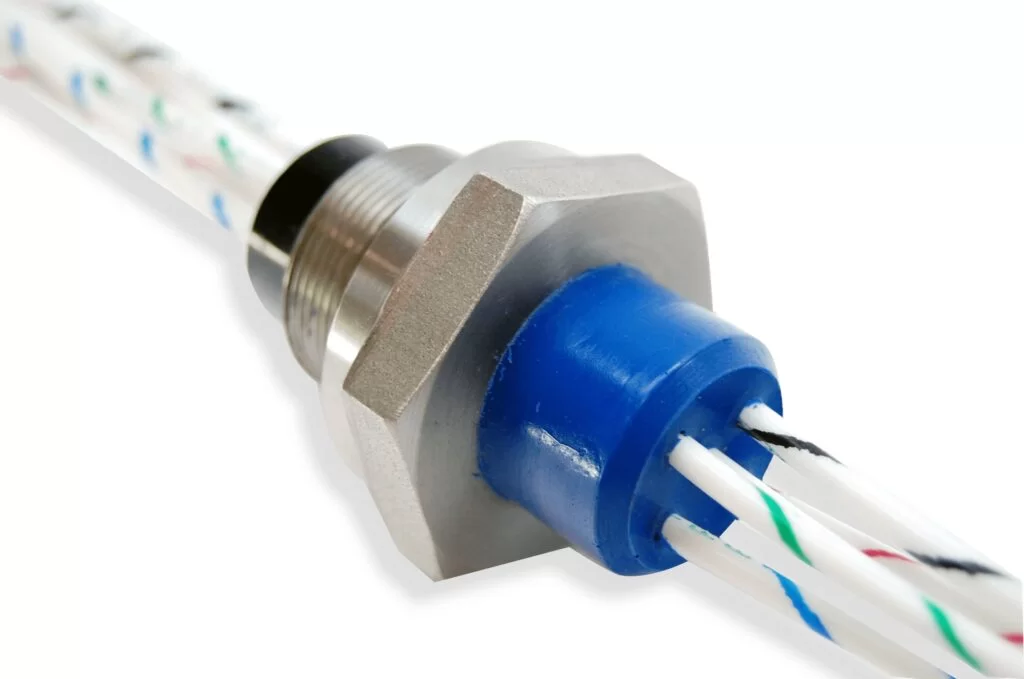
A hermetic feedthrough used in space applications is engineered to maintain both electrical performance and complete environmental sealing under extreme conditions. It typically consists of conductive pins, high-performance insulating materials, and a metal housing designed for structural integrity.
The conductive elements carry electrical signals or power between internal and external systems, while insulating materials such as ceramic or glass prevent electrical short circuits and maintain separation between conductors. These components are permanently bonded using advanced techniques such as glass-to-metal sealing or high-temperature brazing.
This construction ensures that the feedthrough can withstand vacuum conditions, radiation exposure, and thermal cycling without degradation.
PAVE Technology and Space-Grade Hermetic Feedthrough Solutions
In the field of advanced aerospace engineering, PAVE Technology is recognized for developing high-reliability hermetic feedthrough solutions specifically designed for space exploration applications. Their engineering focus is on durability, precision, radiation resistance, and long-term operational stability in extreme environments.
PAVE Technology designs feedthrough systems used in satellites, spacecraft power systems, scientific payloads, communication modules, and space station equipment.
By combining advanced materials, precision engineering, and rigorous testing, PAVE Technology ensures that every hermetic feedthrough meets the strict reliability requirements of space missions where failure is not an option.
Materials Used in Space-Grade Hermetic Feedthrough Design
Material selection is one of the most critical aspects of designing a hermetic feedthrough for space applications. Space environments expose components to extreme thermal cycles, radiation, and vacuum conditions, requiring materials with exceptional stability.
Ceramic materials such as alumina are widely used for insulation due to their excellent dielectric strength, thermal resistance, and low outgassing properties. These characteristics are essential for maintaining vacuum integrity in space systems.
Metals such as titanium, stainless steel, and nickel-based alloys are used for structural housings and conductive elements because of their strength, corrosion resistance, and ability to withstand thermal stress.
Glass-to-metal sealing technology is also used in high-reliability applications to achieve ultra-low leakage rates and long-term stability in space environments.
PAVE Technology carefully selects and validates all materials used in its hermetic feedthrough systems to ensure compatibility with space-grade requirements.
Role of Hermetic Feedthrough in Satellite Systems
Satellites rely heavily on complex electronic systems for communication, navigation, Earth observation, and data transmission. These systems must operate continuously for years in harsh space conditions.
A hermetic feedthrough enables electrical connections between satellite internal systems and external components such as antennas, sensors, and solar panels while maintaining a sealed environment.
It ensures that internal electronics remain protected from vacuum exposure and radiation while maintaining stable signal transmission.
PAVE Technology provides advanced feedthrough solutions designed for satellite systems where reliability, longevity, and signal integrity are critical.
Spacecraft and Deep Space Mission Applications
Spacecraft used for deep space exploration, planetary missions, and interplanetary travel require extremely high levels of system reliability. These missions often operate far beyond Earth, where repair is impossible.
A hermetic feedthrough is used in spacecraft avionics, propulsion systems, scientific instruments, and communication systems to ensure stable electrical connectivity in sealed environments.
These systems must withstand launch vibration, deep-space radiation, and extreme temperature fluctuations ranging from intense heat to deep cold.
PAVE Technology develops space-grade feedthrough systems designed to support long-duration missions with zero tolerance for failure.
Space Stations and Human Spaceflight Systems
Human spaceflight systems such as space stations require highly reliable life-support and communication systems. Astronaut safety depends on the continuous operation of sealed electronic systems.
A hermetic feedthrough is used in environmental control systems, power distribution units, communication modules, and scientific research equipment onboard space stations.
It ensures that internal systems remain isolated from the vacuum of space while maintaining reliable electrical connectivity.
PAVE Technology supports human spaceflight programs by providing high-reliability feedthrough systems designed for long-term orbital operation.
Engineering Challenges in Space Feedthrough Design
Designing a hermetic feedthrough for space applications involves overcoming several extreme engineering challenges.
One of the biggest challenges is radiation exposure, which can degrade materials and affect electrical performance over time. Components must be designed to resist radiation-induced damage.
Thermal cycling is another major challenge, as spacecraft experience extreme temperature variations when moving between sunlight and shadow.
Outgassing is also a critical concern in vacuum environments, as released gases can contaminate sensitive instruments or optical systems.
Mechanical stress during launch adds further complexity, requiring feedthroughs to withstand intense vibration and acceleration forces.
PAVE Technology addresses these challenges through advanced engineering simulation, radiation-resistant materials, and precision manufacturing techniques.
Testing and Qualification for Space Applications
Every hermetic feedthrough used in space exploration must undergo extremely rigorous testing and qualification processes to ensure reliability.
Helium leak testing is used to confirm ultra-low leakage rates, ensuring vacuum integrity. Thermal vacuum testing simulates space conditions by exposing components to vacuum and extreme temperatures.
Radiation testing evaluates the material’s resistance to space radiation environments, while vibration testing simulates launch conditions.
Electrical testing ensures that signal transmission remains stable under all environmental conditions.
PAVE Technology applies strict aerospace and space industry standards to ensure that every feedthrough meets mission-critical performance requirements.
Future Trends in Space Hermetic Feedthrough Technology
The future of hermetic feedthrough technology in space exploration is driven by advancements in miniaturization, deep space missions, and satellite constellations.
One key trend is the development of ultra-compact, high-density feedthrough systems that support more connections in smaller spacecraft designs.
Another trend is the use of advanced composite materials and radiation-hardened ceramics that improve durability and reduce weight.
Smart monitoring systems capable of detecting seal integrity and electrical performance in real time are also emerging.
PAVE Technology continues to innovate in this field by developing next-generation hermetic feedthrough systems designed for future space exploration missions.
Conclusion
The hermetic feedthrough is a critical component in space exploration technology, enabling reliable electrical communication while maintaining complete environmental sealing in the harsh conditions of space. From satellites and spacecraft to space stations and deep-space probes, these components ensure mission success, safety, and long-term operational stability.