
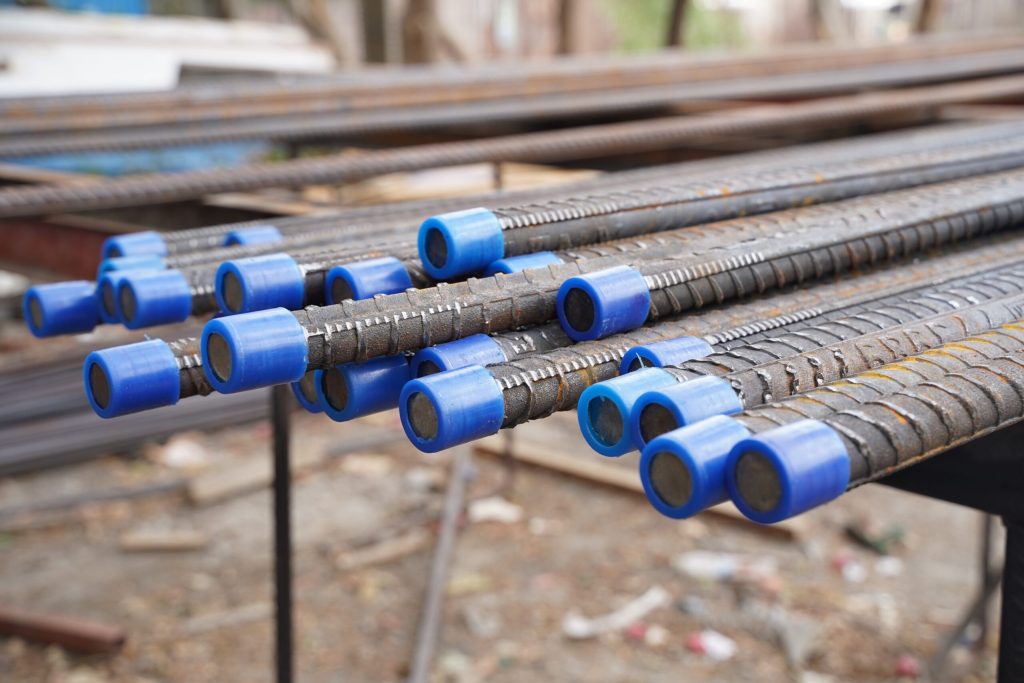
Reinforced concrete structures are designed to behave as a monolithic unit, with continuous reinforcement provided by splicing individual reinforcing bars together. Traditional reinforcement methods include butt welding, lap splicing, and mechanical splicing. While these methods have been widely used in construction, they have limitations and challenges. In recent years, rebar couplers have emerged as an alternative reinforcement method, offering several advantages over traditional methods.
Traditional Reinforcement Methods
Butt Welding
Butt welding involves joining two pieces of reinforcement together by welding their ends. This method depends on the chemical properties of the reinforcing bars for adequate weldability. While butt welding can provide a strong joint, it can be costly and not suitable for every type of reinforcing bars.
Lap Splicing
Lap splicing, or lapping, is the traditional method of joining two different reinforcements by overlapping them. This method is commonly used due to its ease of transportation and handling. However, lap splicing has several drawbacks. It can lead to wastefulness as a portion of the bars is overlapped and wasted. Additionally, lap splicing can result in heavy reinforcement congestion in a section of a concrete member, making it difficult to place and consolidate the concrete. The structural integrity of lap splices is also a concern, especially in seismic applications where they can infringe on the plastic hinge region, violating code limitations.
Rebar Couplers as an Alternative
Rebar couplers, or mechanical splices, are an alternative reinforcement method that provides an end-to-end connection for continuous reinforcement. They are designed to join two reinforcing bars, making them one continuous unit. There are two main types of rebar couplers: threaded and non-threaded couplers.
Benefits of Rebar Couplers
- Rebar couplers improve structural integrity by providing a stronger joint than lap splicing. The two bars connected by a coupler behave as a continuous unit, and the load transfer does not rely entirely on the concrete bond. This is especially advantageous in seismic applications, where mechanical splices maintain structural integrity when bars are stressed into the inelastic range.
- Rebar couplers eliminate the need for overlapping bars, resulting in significant savings in materials and cost. The steel saved equals the lap length, making couplers for rebar a more economical and environmentally friendly option.
- Lapping of reinforcement bars can cause congestion, making it challenging to place and compact the concrete properly. Rebar couplers, on the other hand, do not overlap, thus reducing congestion and facilitating easier concrete placement and consolidation.
- Using rebar couplers simplifies the construction process by eliminating the need for on-site welding and complex calculations for lap length. They also improve on-site safety by removing the risk of protruding rebar through shuttering, which can be dangerous for workers.
- Rebar couplers enhance the overall structural integrity of the joint by providing continuous reinforcement independent of the concrete. This gives ductility to RCC structures, even if the concrete condition is compromised.
When to Prefer Rebar Couplers?
Rebar couplers offer several advantages over traditional reinforcement methods, making them a preferred choice in specific scenarios:
- When there is a need to join two reinforcing bars to achieve continuous reinforcement over a long expanse.
- When there is a requirement to extend an existing reinforcing bar beyond its current length.
- In situations where a section of the in-place rod needs to be replaced due to damage.
- Lapping can lead to significant congestion and splitting forces when using large-diameter reinforcement bars.
- In seismic areas, rebar couplers’ improved structural integrity and ductility are advantageous.
- When there is a focus on reducing construction waste and promoting sustainability by minimising steel consumption and associated greenhouse gas emissions.
- When on-site safety is a priority, rebar couplers eliminate the need for dangerous protruding rebar and on-site welding.
Speed and ease are important when construction is important, and rebar couplers offer quicker installation and simplify construction.
By providing stronger and more reliable joints, reducing waste, improving structural integrity, and enhancing construction safety and speed, rebar couplers have become an essential tool in the industry. However, it is important to carefully consider the limitations of rebar couplers, such as the need for skilled labour and potential misalignment issues, when deciding whether to use them over traditional methods.