
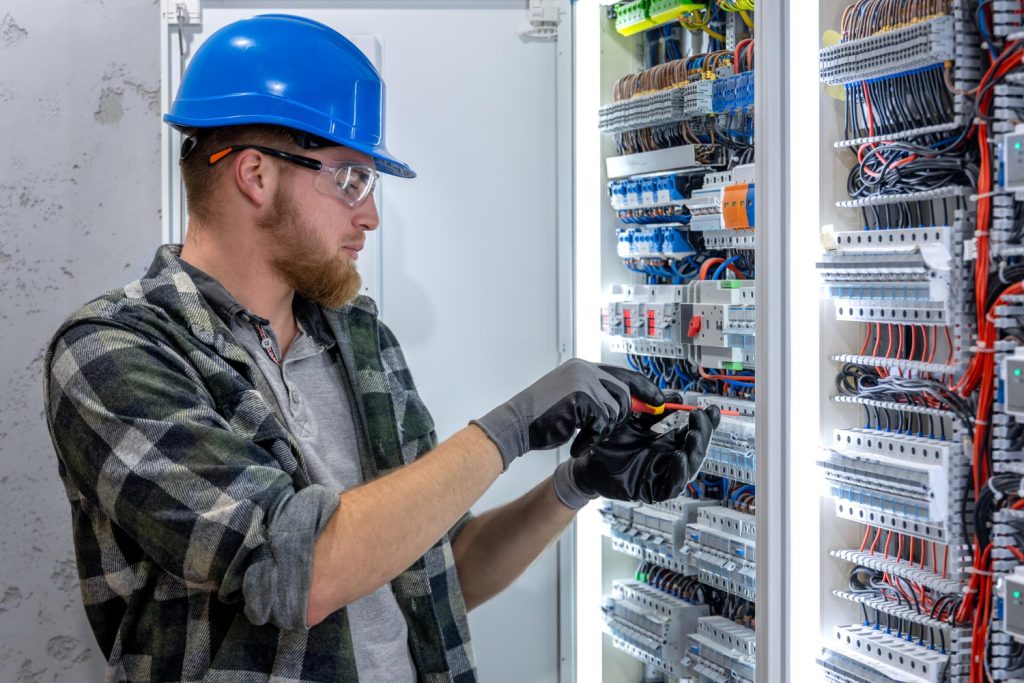
The miniature circuit breakers (MCBs) are quite essential when it comes to the issue of ensuring secure and reasonable electrical infrastructures in any given business. The machines will not only ensure that the electrical installations of the buildings are safe but will also do a lot in ensuring the legal and regulatory provisions of compliance.
Explore how MCBs support electrical safety compliance
Understanding the role of miniature circuit breakers
Miniature circuit breakers are electric safety devices that are used to guard circuits against damages in case of overloads or short circuits. They also switch off power automatically in case they observe any electrical faults to avoid causing additional harm to electrical equipment and also minimizing the possibility of fire or electric shocks.
The following are some of the key areas that the MCBs assist businesses to remain safe:
- Overload protection: MCBs stop too much current flowing which may otherwise harm the equipment or overheat them.
- Short circuit protection: MCBs will break the circuit in case of any short circuit and thus avoid fire hazards and equipment breakdowns.
- Safety of workers: MCBs provide safety to workers by ensuring they are not exposed to electrical risks such as in case of faults by disconnecting power quickly.
- Compliance with regulations: There are numerous safety standards and regulations which mandate businesses to have MCBs installed in their electrical systems so as to be in compliance with the law.
How MCB installation helps businesses stay compliant
Installation of miniature circuit breaker is not only about the protection of equipment, but also about remaining compliant with the industry standard and regulation. The laws on electrical safety require some measures to ensure that electrical accidents are not experienced, and MCBs form a significant portion in this compliance process.
This is how MCBs ensure that businesses remain abreast of these requirements:
- Compliance with national safety standards: In most countries, MCBs must comply with the national electrical safety standards of regulatory organizations. Through MCBs, it is through these laws that businesses are abiding by.
- Ensuring workplace safety: MCBs serve to safeguard employees against electrical hazards and therefore, it becomes a legal obligation of the businesses to install them in their places of work.
- Eliminating downtimes: Proper installation of MCBs will lessen the chance of electrical faults that may cause an expensive downtime or repair and ensure businesses operate without hitches.
Types of MCB protection features
Various kinds of MCBs have their protection features. Knowledge of these options can enable businesses to choose the appropriate MCBs for their specific needs.
The following are some of the standard features of MCBs:
- Thermal protection: Provides overload protection over extended overload periods by relying on a bimetallic strip, which bends with increasing temperature.
- Magnetic protection: Superior to short circuiting, a solenoid is used to disconnect the circuit in the presence of a short circuit.
- Combination of both: A large number of MCBs have both thermal and magnetic protection to provide extensive overload and short circuit protection.
Maintaining electrical safety with MCB regular checks
MCBs require regular check and maintenance which are essential to maintenance and compliance of the electrical system of a business. The following is how you would retain the integrity of MCBs:
- Check MCBs regularly: MCBs should also be checked to make sure they are operating properly, with a regular check of MCBs to determine whether they are worn or not.
- Test MCBs periodically: Intentional tests of the MCBs should be done by verifying that they are functioning properly to ensure that the circuit is disconnected where necessary.
- Replace faulty MCBs promptly: In case an MCB is detected to be faulty/ malfunctioning, a replacement is recommended as soon as possible to avoid possible hazard.
Conclusion
Miniature breakers are important in facilitating compliance to electrical safety by businesses. The businesses can increase the safety level, minimize risks, and keep the electrical system in compliance with industry standards by choosing the proper MCBs, performing regular checks, and keeping the electrical system in proper condition.