
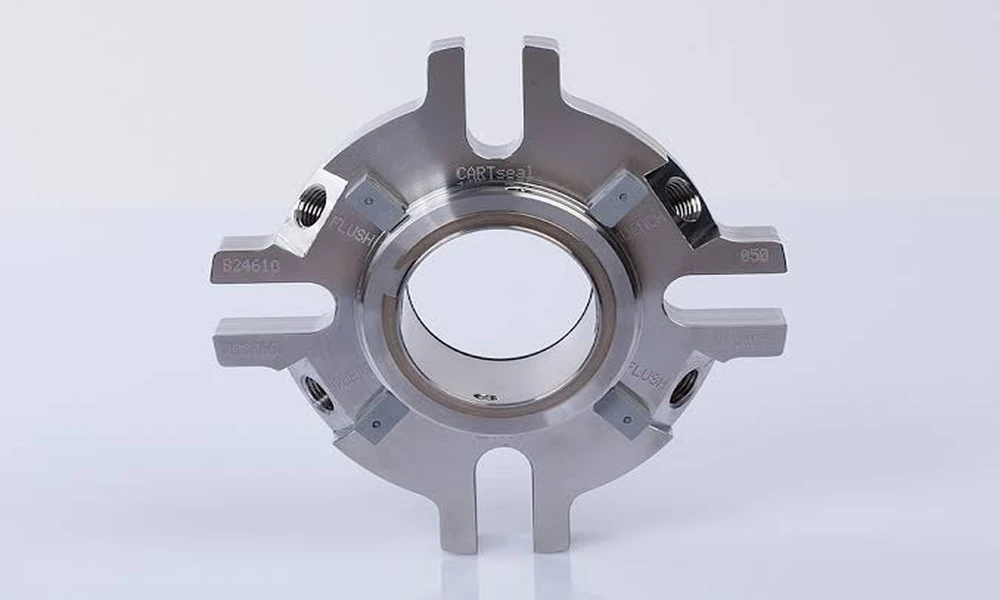
Mechanical seals are critical components in rotating equipment, preventing process fluids from escaping along the rotating shaft of pumps, compressors, mixers, and agitators. Among the range of mechanical seal designs available, cartridge mechanical seals offer a combination of ease of installation, reduced maintenance risk, and consistent performance that has made them a preferred choice in demanding industrial applications. Understanding the different cartridge seal types and their appropriate applications is essential for reliability engineers and maintenance teams.
What Is a Cartridge Mechanical Seal?
A cartridge mechanical seal is a pre-assembled, self-contained sealing unit that includes all primary and secondary sealing components, drive mechanisms, and springs within a single housing that can be installed and removed as a complete assembly. Unlike component seals, which require assembly at the equipment during installation, cartridge seals arrive pre-set with the correct spring compression and face alignment.
This pre-assembly approach significantly reduces installation time and the risk of errors that occur when technicians assemble component seals under workshop or field conditions. Incorrect spring compression, contamination of seal faces during installation, and misalignment are common causes of premature component seal failure, all of which cartridge seal designs inherently eliminate.
Types of Cartridge Mechanical Seals
Cartridge mechanical seals are available in several configurations, each suited to specific operating conditions. The main types found in industrial use are:
- Single cartridge seals – use one pair of seal faces, suitable for non-hazardous, non-toxic fluids
- Double cartridge seals (back-to-back) – two seal face pairs with a barrier fluid, for hazardous or high-value fluids
- Double cartridge seals (tandem) – two seal face pairs with a buffer fluid, for leakage detection without process contamination
- PTFE-sealed cartridge designs – for highly corrosive chemical applications requiring chemical resistance throughout
- Gas-lubricated cartridge seals – for dry running applications in gas compression or chemical vapour service
The selection between single and double cartridge seal configurations is primarily driven by the hazard classification of the process fluid, regulatory requirements for emissions containment, and the consequences of a seal failure. API 682, the widely referenced standard for mechanical seals in the petroleum, chemical, and gas industries, provides a structured framework for making this selection based on fluid category and application severity.
PTFE Sealing Rings and Their Role in Cartridge Seals
PTFE (polytetrafluoroethylene) sealing rings are secondary sealing elements used in cartridge mechanical seals to prevent leakage along the shaft and between seal components. PTFE is chosen for its exceptional chemical resistance, covering virtually the entire range of industrial process chemicals, and its low friction characteristics, which reduce wear and heat generation in the secondary seal interface.
In highly corrosive chemical service, PTFE secondary seals are often specified alongside silicon carbide or tungsten carbide seal faces to create a fully chemically resistant seal assembly. This combination is common in chemical manufacturing, pharmaceutical processing, and acid handling applications where elastomeric secondary seals would degrade rapidly in service.
Mechanical Seal Manufacturers in India
India has developed a capable base of mechanical seal manufacturers over the past three decades, serving both domestic process industries and export markets. Domestic manufacturers offer cartridge mechanical seals across the range of common configurations and materials, with an increasing number qualifying their products to international standards including API 682 and ISO 21049.
When evaluating mechanical seal manufacturers in India, key considerations include the manufacturer’s in-house machining capability for seal faces and hardware, the range of secondary seal materials available, the manufacturer’s testing capabilities for verifying seal performance under simulated operating conditions, and their track record in the specific application being sealed. Established Indian manufacturers with dedicated engineering teams can provide application-specific seal selection support that goes beyond standard catalogue offerings.
Maintenance and Troubleshooting of Cartridge Mechanical Seals
Even well-selected and correctly installed cartridge mechanical seals have finite service lives. The most common causes of premature failure include dry running due to loss of flush or barrier fluid, thermal shock from process temperature excursions, vibration from mechanical or hydraulic imbalance in the rotating equipment, and contamination of seal faces by particles in the process fluid.
Condition monitoring approaches that help extend seal life include leakage detection instrumentation for double seals, barrier fluid temperature and pressure monitoring, and periodic vibration analysis on the pump or mixer shaft. When seals are removed for inspection during maintenance shutdowns, the pattern of wear and damage on the seal faces provides valuable diagnostic information about the root cause of reduced seal life, enabling process or installation adjustments before the replacement seal is put into service.
Specifying Cartridge Seals for Your Application
A complete specification for a cartridge mechanical seal should include the shaft diameter and tolerance, operating speed, process fluid identity and properties including viscosity, temperature, and pressure, the presence of solids or abrasives, and the required seal arrangement. For double seals, the barrier or buffer fluid type, pressure, and flow requirements also need to be specified.
Providing these details to mechanical seal manufacturers in India enables them to recommend the appropriate seal configuration, face material combination, and secondary seal materials. Standard catalogued cartridge seals cover the majority of common applications, but custom engineered seals are available for applications involving unusual fluid properties, extreme temperatures, or non-standard shaft sizes that fall outside standard range.
Seal Face Material Selection for Challenging Fluids
The choice of seal face material has a direct impact on seal service life in challenging process conditions. Silicon carbide paired with silicon carbide offers excellent chemical resistance and hardness, making it suitable for abrasive slurries and corrosive fluids, but its brittleness makes it susceptible to thermal shock in applications with rapid temperature cycling. Carbon-graphite paired with silicon carbide provides a more forgiving combination in clean fluids where the self-lubricating properties of carbon are beneficial.
For highly corrosive applications such as concentrated acids, exotic materials including aluminium oxide, Stelite, and various grades of silicon carbide provide options for conditions where standard material combinations degrade rapidly. Mechanical seal manufacturers in India with in-house metallurgical capability can advise on material selection for non-standard process conditions, drawing on experience from comparable applications to identify the combination most likely to deliver the required service life. Understanding concepts like cartridge mechanical seal types helps in making better decisions in this field.
Keyword Frequency
| Keyword | Count | Status |
|---|---|---|
| mechanical seal manufacturers in india | 4 | ✓ |
| cartridge mechanical seal types | 1 | ✓ |
| mechanical seal manufacturers | 5 | ✓ |
| cartridge mechanical seals | 6 | ✓ |
| cartridge mechanical seal | 10 | ✓ |
| ptfe sealing rings | 1 | ✓ |
| ptfe sealing | 1 | ✓ |